From responding to entangled whales to collecting vital research data in the Monterey Bay National Marine Sanctuary, our team works to protect marine mammals and inspire the next generation of ocean stewards.
entangled humpback calf - thanksgiving weekend
whale entanglement team® responded saturday, 11/25/17, after receiving call about entangled whale in the Monterey Bay
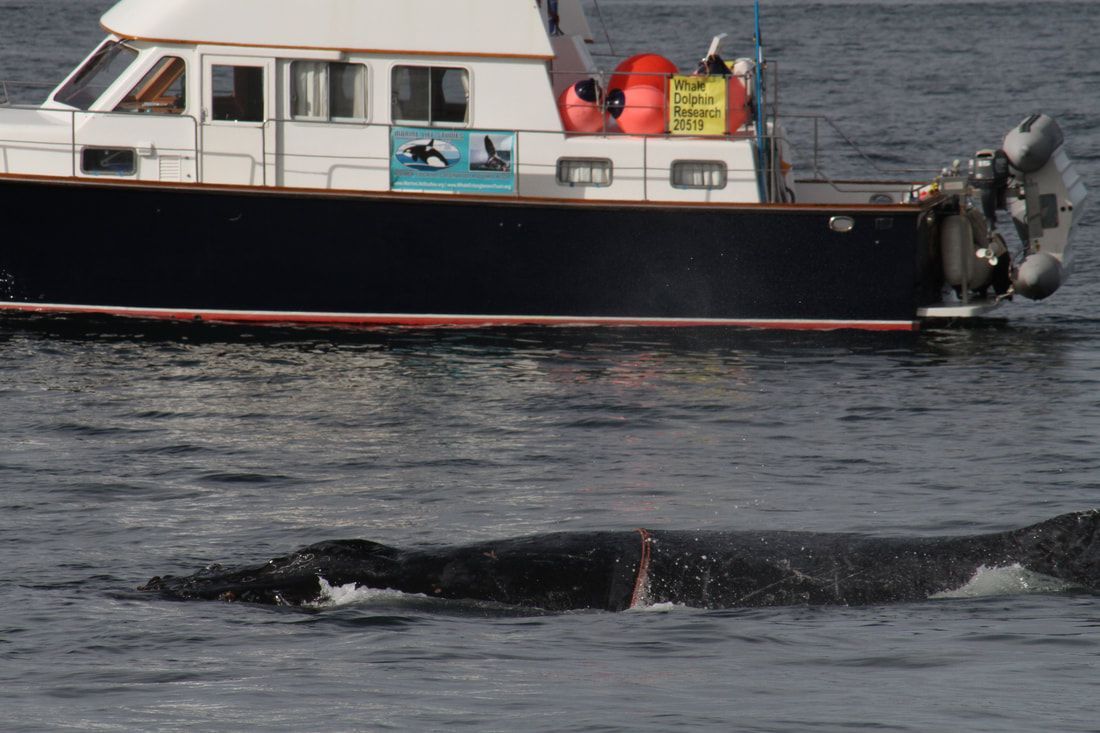
Marine Life Studies' Whale Rescue Research Vessel with WET® crew arrive on scene to start assessment of the entanglement.
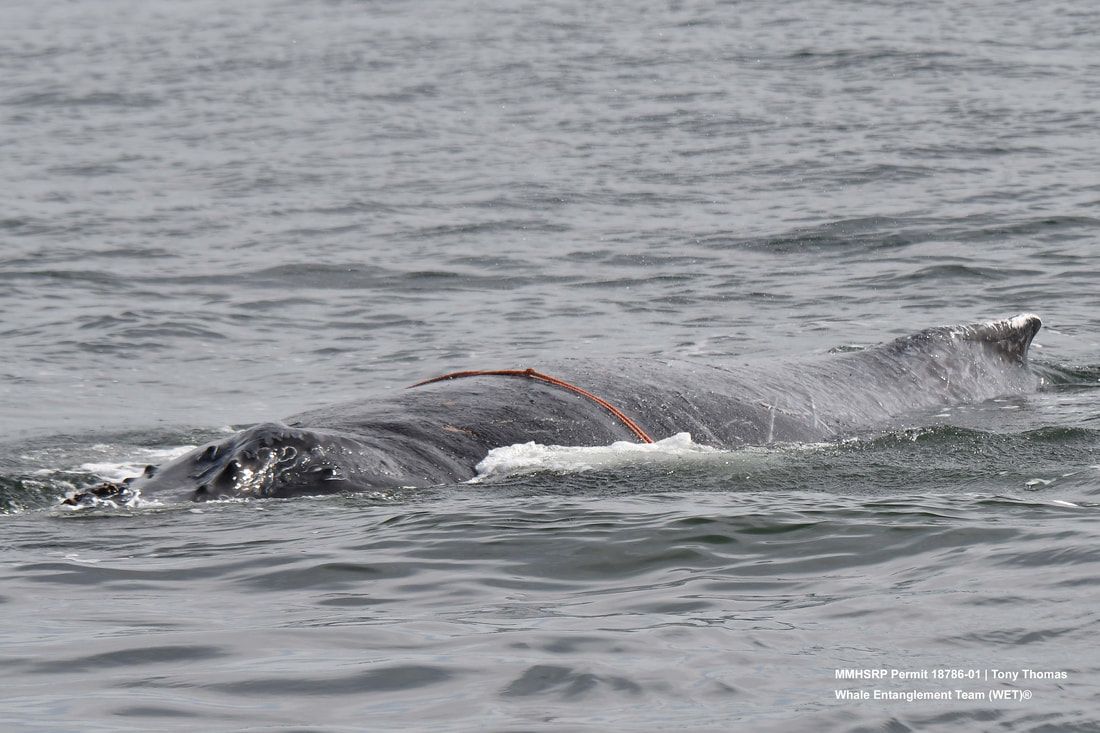
Notice the double line tightly wrapped around body between blowhole and dorsal fin of humpback whale calf.
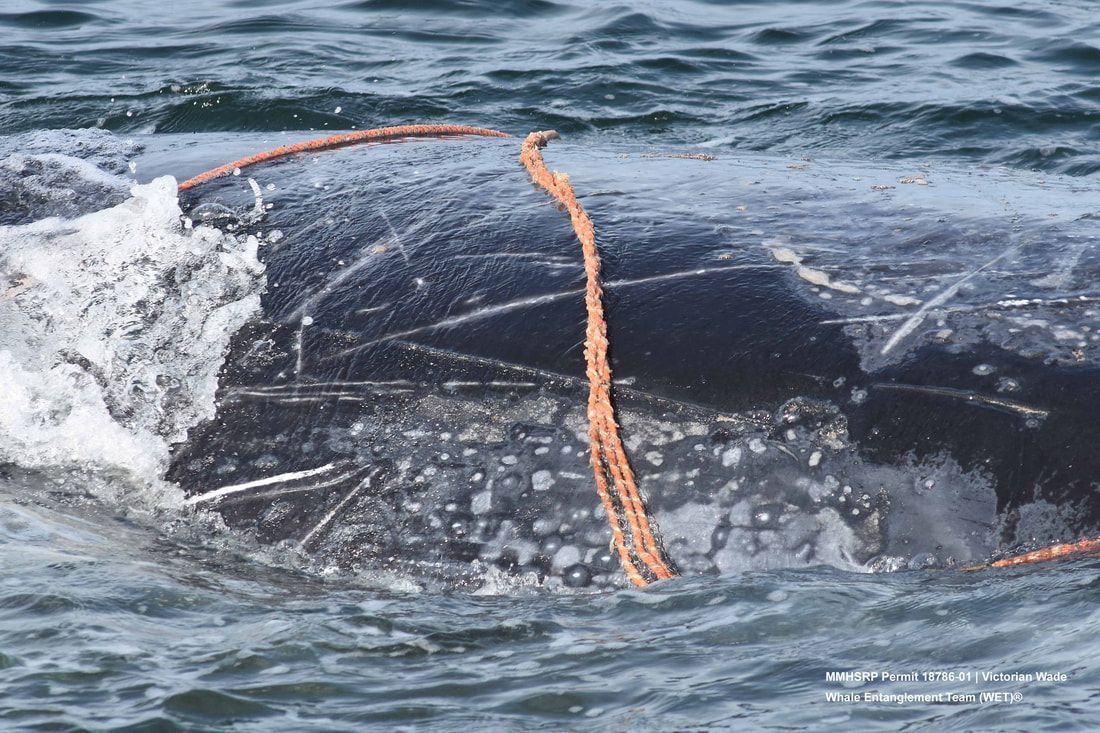
During the assessment phase, team noticed that double line wrapped around body had begun to separate.
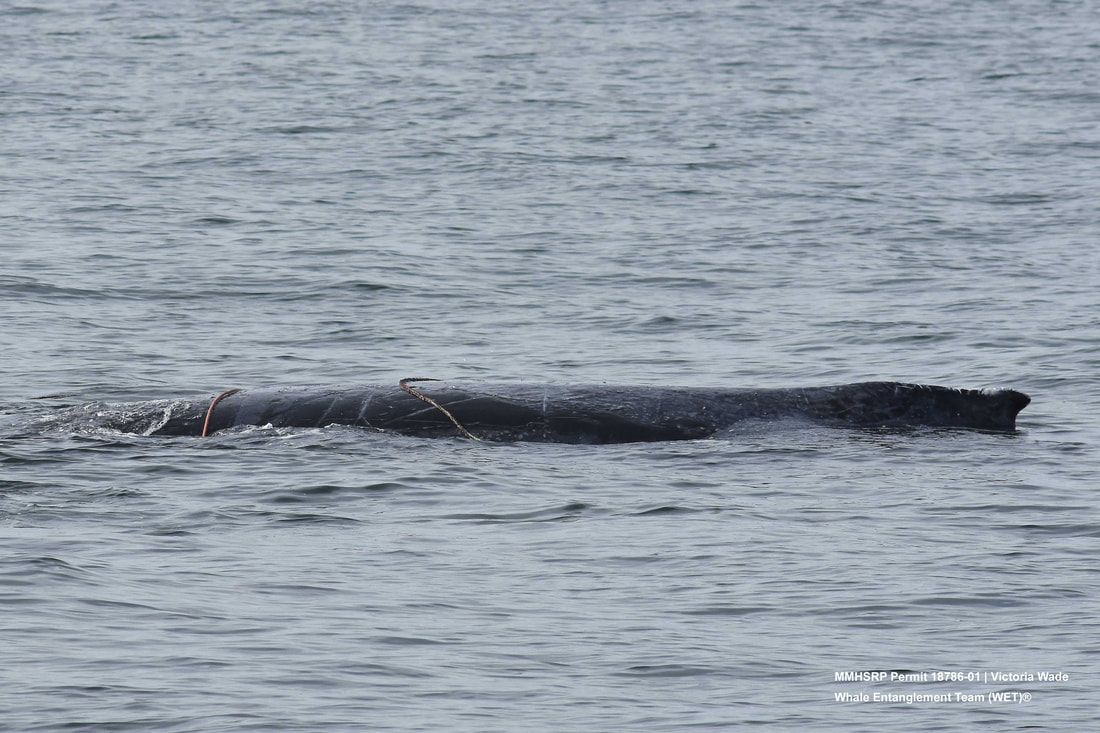
Notice how the line across the body on the left of the photo is now just one strand. The older looking line was first seen trailing behind the whale, but later moved and draped over the back of the animal.
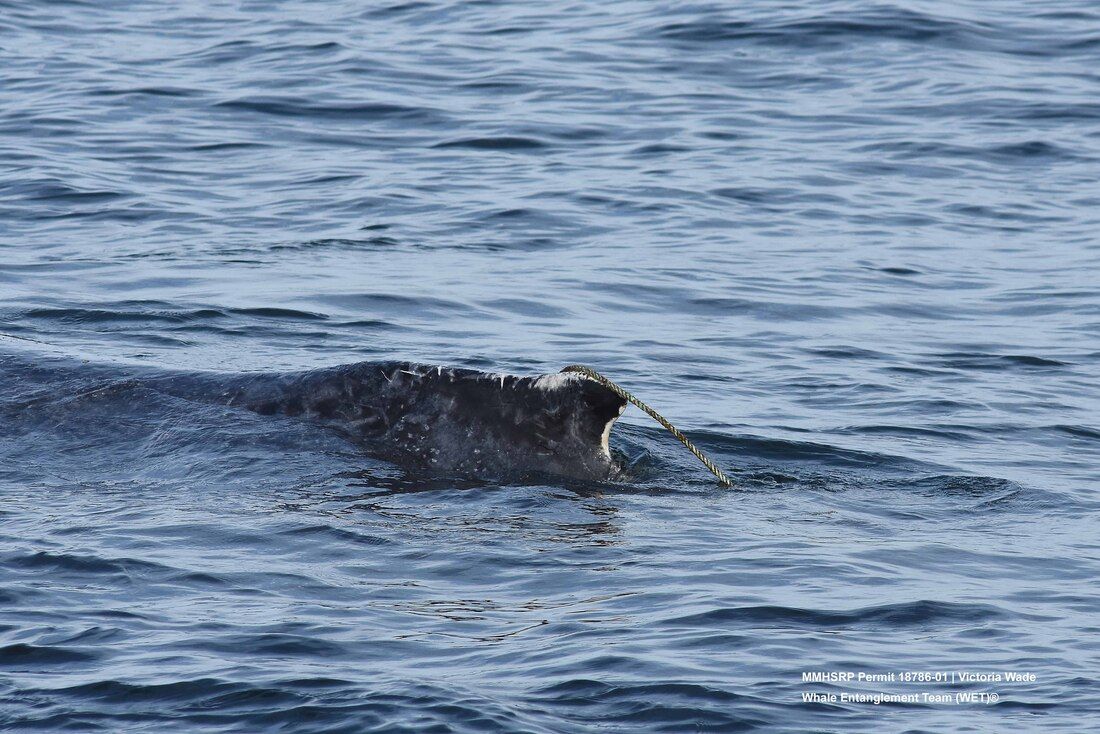
Notice how the older trailing line has moved over body to the right to tip of dorsal of the humpback calf, about to fall off.
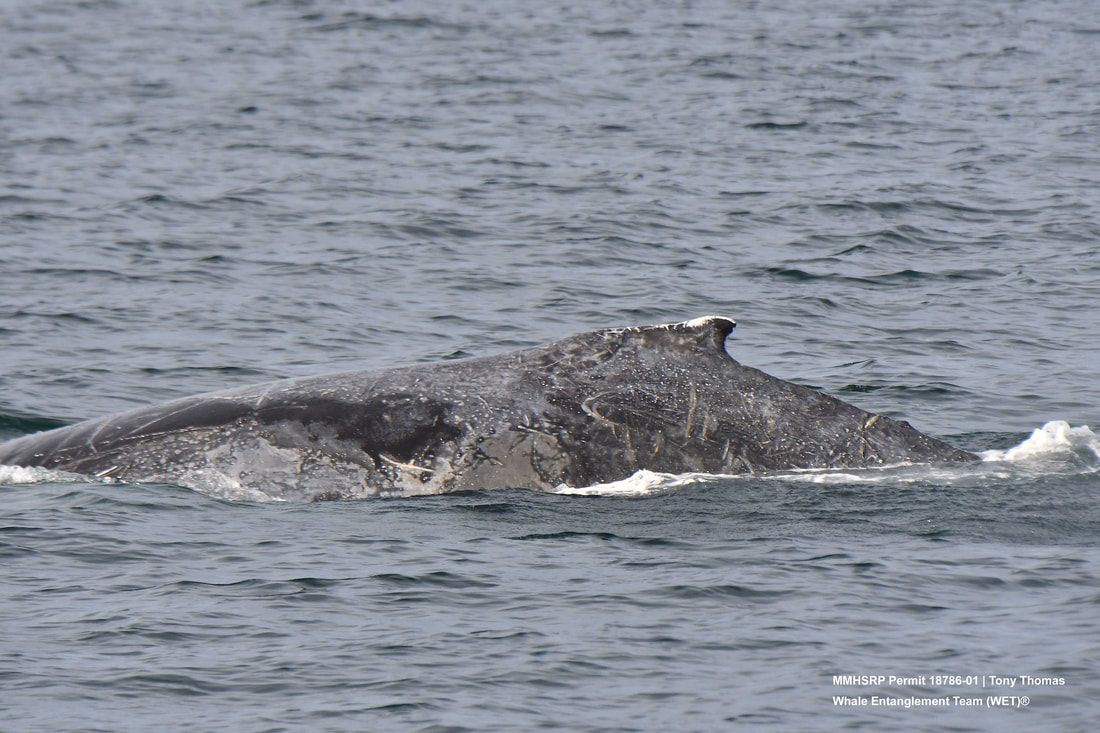
All lines have now fallen away from the calf. We verified no other line on the body, but could see line under the surface of the water trailing a short distance beyond flukes.
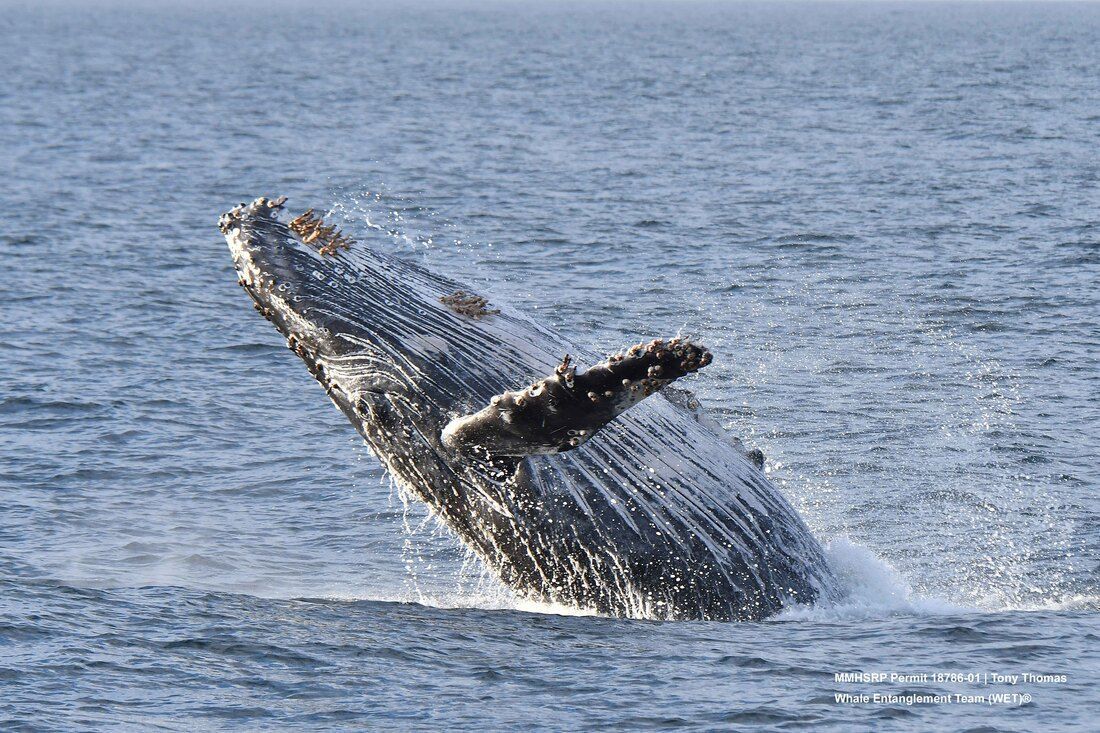
Then, the calf began breaching; most likely to dislodge the last of the line that may have been partially in the mouth or loosely wrapped around the right pec fin. During the assessment phase, we knew there was no line wrapped around the left pec fin but were unable to confirm right pec as the mom continued to come between the calf and our vessel.
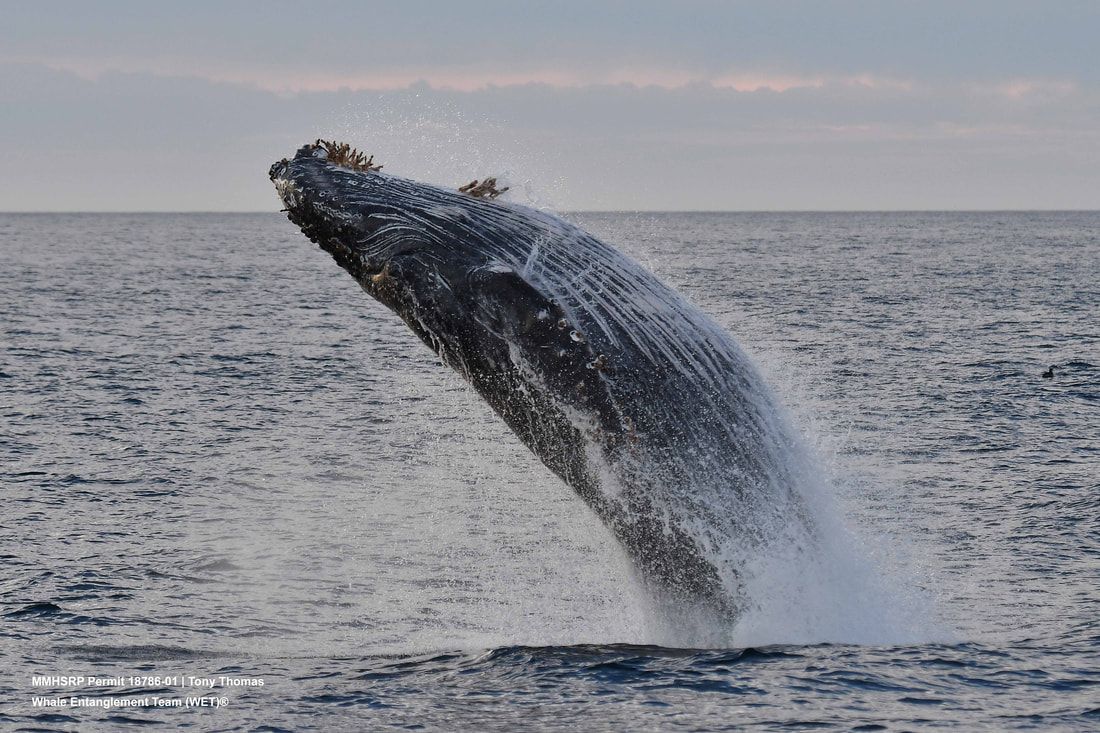
While the calf breached multiple times, we were able to observe that no lines were wrapped around pec fins or through the mouth on both the right and left, as well as no lines wrapped around body at fluke insertion nor around the fluke. The calf, indeed, threw the gear on its own. This is a known outcome that can happen, but we were ready to take the necessary steps if a full disentanglement response was needed. This is the first time we observed the self-release process of an active entanglement.
During the SPLASH project (Structure of Populations, Levels of Abundance and Status of Humpbacks) project 2004 through 2006, the most comprehensive study ever attempted of the North Pacific humpback whale poplulation. Peggy Stap, founder of Marine Life Studies and co-founder of the WET®, was part of this project both in Maui and in Monterey Bay. One result from this study was that over 50% of humpback whales in the North Pacific had entanglement scars so we knew some of them were throwing the gear. What we did not know is how many have died from entanglements. The WET® crew was thrilled to see this calf free of the entanglement and swimming freely with mom.
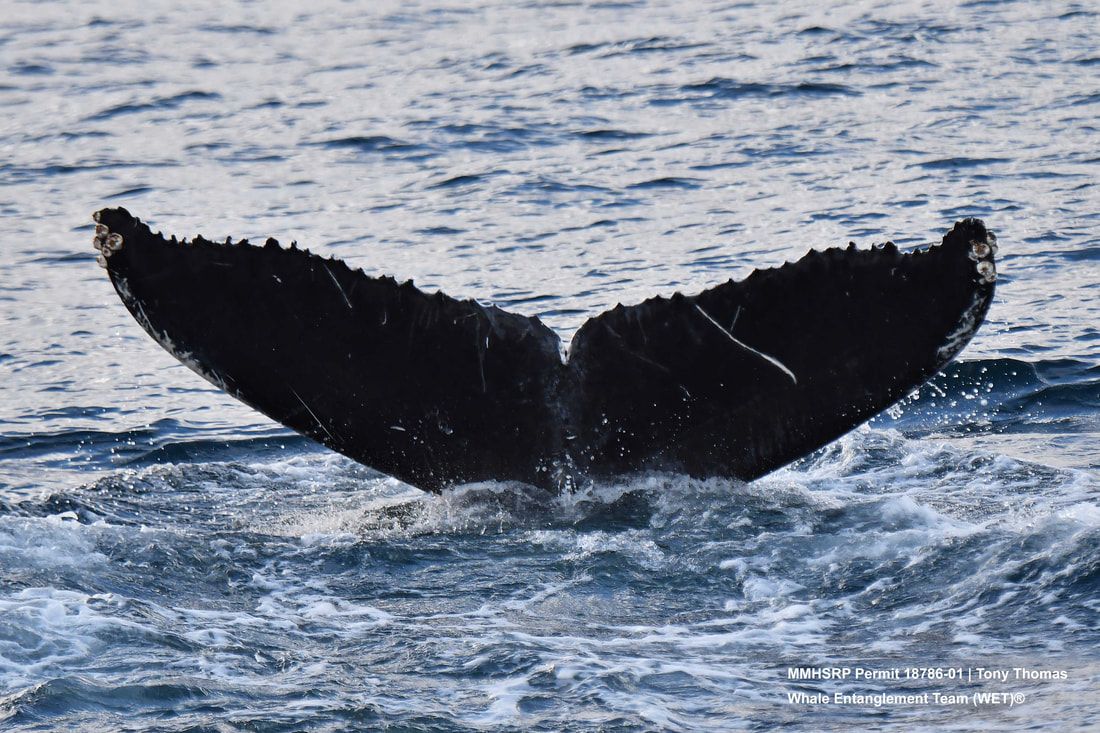
Calf fluke identification
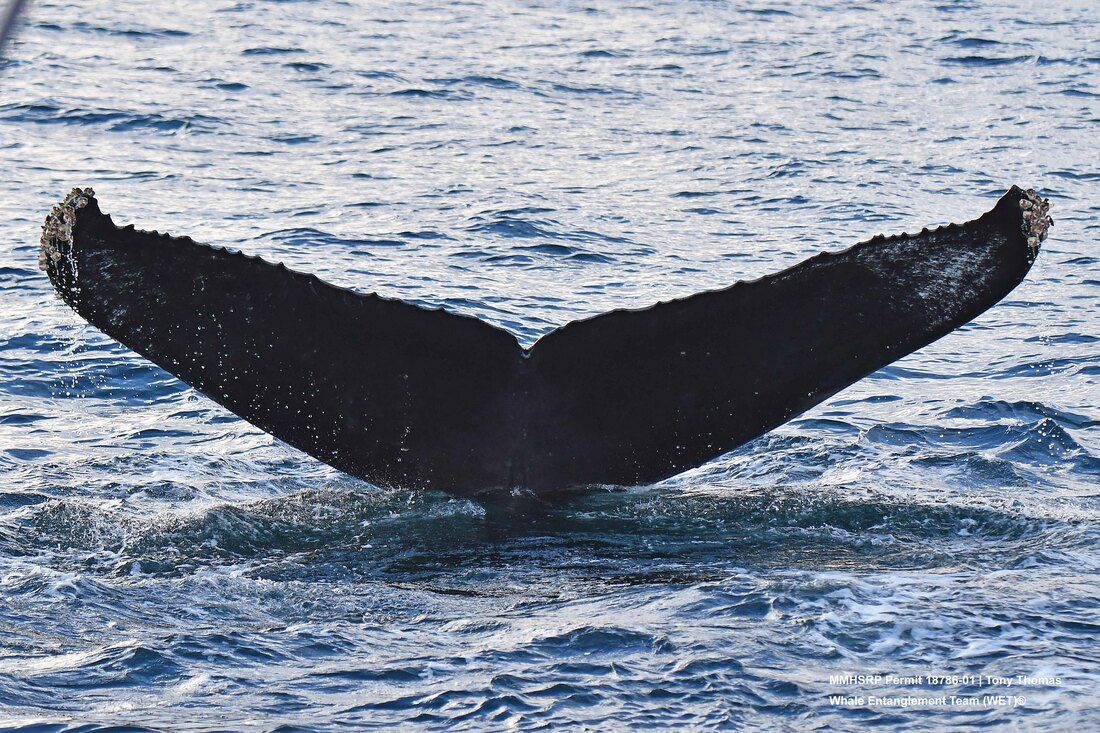
Mother of calf fluke identification
How you can help if you see an entangled whale:
Report immediately, call 877-SOS-WHALE (877-767-9425) or hail the U.S. Coast Guard on VHF CH-16.
If possible, please stay with the animal while maintaining 100 yards distance from the animal. Authorized personnel will guide you as what to do next.
Provide the following information to help authorized responders:
- Note the nature of the entanglement, location of the entanglement on the whale's body (i.e. a blue line wrapped around the tail (fluke) and wrapped around body by dorsal fin, description of the gear trailing (i.e. buoys if any and the number and color of the buoys, line or other gear trailing with approximate distance behind the whale the gear is trailing).
- Relay the whale's exact location (be as specific as possible, include latitude and longitude if available). Did you know you can get your exact location with your smart phone. Click to learn how.
- Other details such as is the animal swimming (speed and direction the animal is heading, is it diving or staying on the surface, is it breathing). One of the important keys to the success of freeing a whale from a life-threatening entanglement is to have someone standing by until one of our Whale Entanglement Team members arrives.
- If you are able, while maintaining 100 yards from the whale, please take high-resolution photographs of the whale including: the right and left side of the animal including the dorsal fin, the head and back on both sides, the area between the dorsal fin and the fluke (tail), the underside of the fluke if the animal is diving (if it dives it will raise its fluke vertically above the water and the underside of that fluke is a unique pattern that we can identify individual animals, like a human fingerprint), and any trailing gear or buoys.
All whale rescues are permitted under NOAA’s Marine Mammal Health and Stranding Response Program (MMHSRP) by trained teams sanctioned by NOAA.
All photos are copyrighted. Photos taken under the MMHSRP Permit. The Whale Entanglement Team (WET)® is part of the West Coast Large Whale Entanglement Response Network.
Learn more about WET® and how you can help.
DONATE TODAY
To donate over the phone, contact us. If you would rather make a
donation by check or money order, please send to:
Marine Life Studies, PO Box 163, Moss Landing, CA 95039